
 English
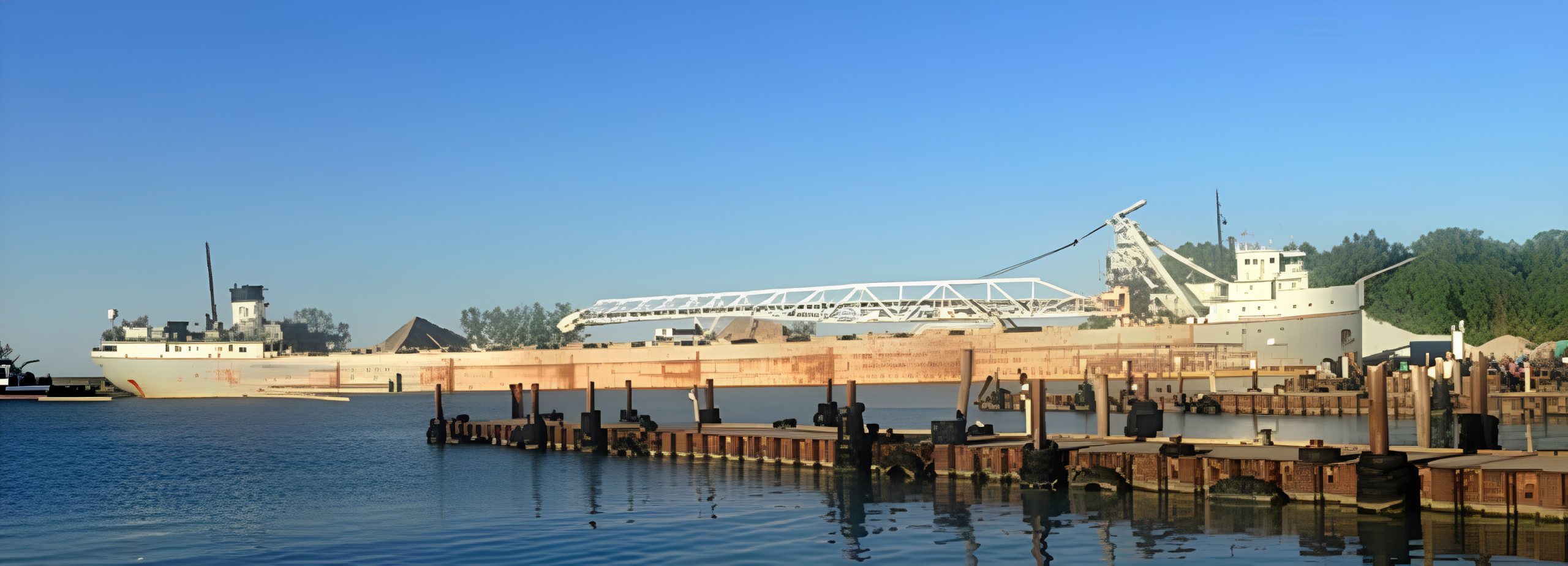
A SELF-UNLOADING BULK CARRIER OPERATING ON THE GREAT LAKES EXPERIENCED A SERIOUS ENGINE ROOM FIRE WHILE NORTHBOUND ON LAKE ERIE, OFF KINGSVILLE, ONTARIO. ALTHOUGH NO INJURIES OR POLLUTION WERE REPORTED, THE DAMAGE TO THE ENGINE ROOM WAS EXTENSIVE.
INCIDENT OVERVIEW
BACKGROUND OF SHIP AND VOYAGE DETAILS
The ship was originally built in 1943, as a steamship and later converted to diesel propulsion.
Due to the date of build, many safety features that are now mandatory were not required and therefore not fitted. For example, the main engine could not be stopped from the ship’s bridge, requiring stoppage locally or by closing fuel supply valves.
Similarly, the main engine pressurised fuel supply lines were not fitted with spray shielding in case of containment failure.
Small fuel leaks on the main engine fuel supply and return lines were considered common. Due to the busy routine of the crew, temporary fixing of leaks had become the norm, with no deeper investigation of the cause.
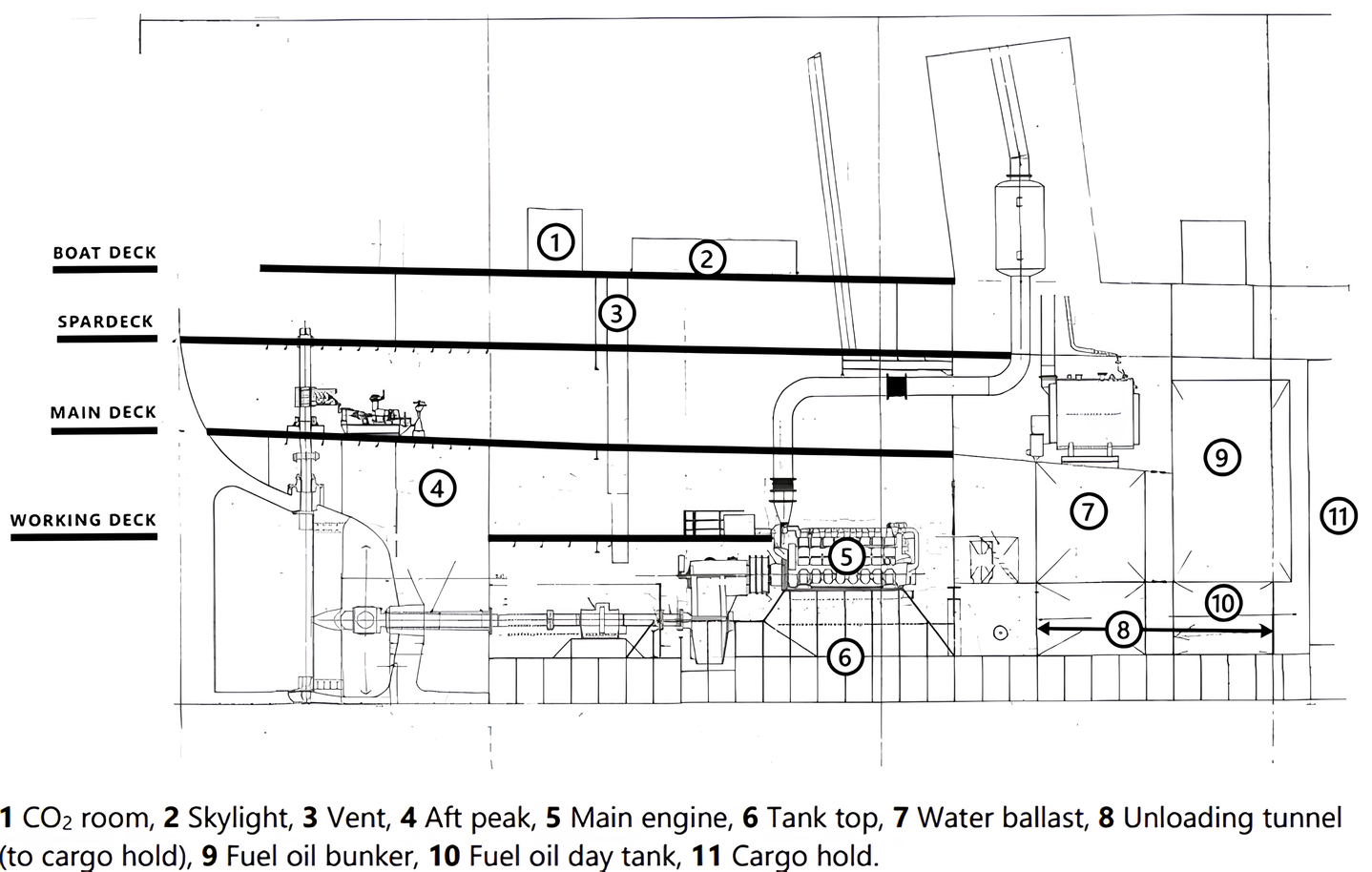
The ship’s machinery space was located aft, and as common with ships of this era, it was fitted with a skylight. The skylight was opened and closed using a winch, the remote control of which was located within the engine control room. Local operation was possible using a manual cranking device.
To improve ventilation some portholes and fire doors were secured in the open position, however these could not be closed remotely.
The machinery space was protected by a carbon dioxide (CO2) fixed firefighting system, that could be remotely activated from a safe position without having to enter the CO2 storage compartment.
Safety equipment met the minimum requirements, meaning the ship had only two firemen outfits, one located aft and one forward.
On the day of the incident, the ship had loaded a cargo of crushed stone at Marblehead, Ohio. The voyage plan called for a northbound transit of Lake Erie to Kingsville, Ontario; a relatively short passage compared with transoceanic trade but one requiring careful navigation due to the high density of shipping on the Great Lakes. The ship carried a complement of twenty crew members, including deck officers, engineers, and support staff. The crew was familiar with the trade, conducting routine voyages between US and Canadian ports.
WHAT HAPPENED
At approximately 2159 hours, flames were observed at the top of the main engine during routine engine room rounds. The duty engineer, attempted to stop the engine but could not reach the control room due to flames and intense heat. The duty engineer subsequently evacuated the engine room and manually raised the general alarm.
The crew mustered according to established emergency procedures, with groups assembled forward and aft. The second engineer did not initially muster at the aft station, later having found to have slept through the alarm. The aft muster station personnel commenced closing machinery space vents and preparing fire hoses for use.
At 2204 the emergency generator was started to ensure continued power supply to essential systems, and the engine room fans were stopped. All personnel were accounted for at 2208. The master notified the ship managers and shore authorities of the situation, before transmitting a Mayday signal, prompting Canadian and US Coast Guard units to stand by.
At approximately 2209 the chief engineer ordered that the quick-closing fuel valves of the main and auxiliary engines were to be activated. At the same time, he started the emergency fire pump.
The engineers could not reach the engine room skylight to close it manually due to the heat and smoke from the fire, and the remote control was inaccessible, being located within the engine room. Despite the skylight and some portholes within the engine room still being open, the master ordered that the ship’s fixed CO2 firefighting system be activated.

The CO2 system, intended as the ship’s primary means of extinguishing a machinery space fire, failed to operate as designed. When the chief engineer attempted to activate it remotely, the CO2 did not discharge. The release wires had parted and had therefore not opened the gas cylinders. A local release attempt was then made from within the CO2 cylinder room at 2215. After operating the release levers, it became apparent that the CO2 cylinder room was filling with CO2 gas, and the chief engineer had to evacuate the space.
At 2217 the ship’s engine had stopped, and the forward anchors were deployed.
At 2221 it was noted that although the emergency fire pump was running, no water was present in the fire main. Initial trouble shooting failed to identify the problem, with the pump apparently running normally, and indicating sufficient discharge pressure.
By 2231 the chief engineer noted a reduction in smoke coming from the engine room skylight, and by 2328, no more smoke was observed.
 BACK TO B